Date:Tue 5/7/2024 8:00 AM
Happy Tuesday, everyone! Today's fish of the day is the candy darter!
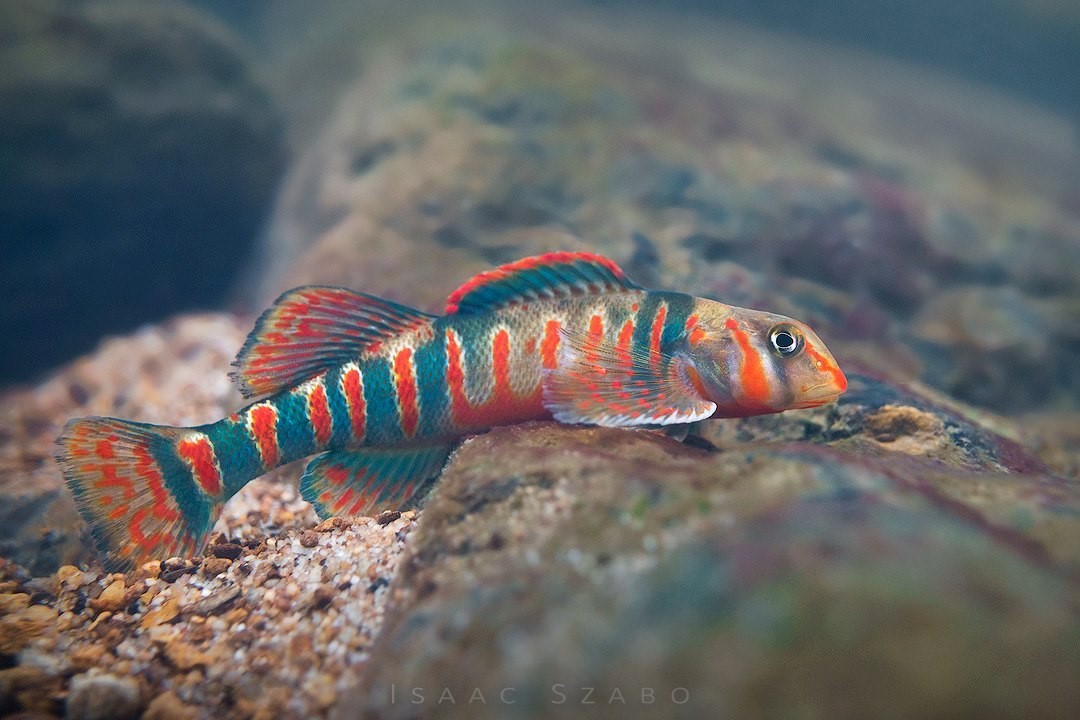
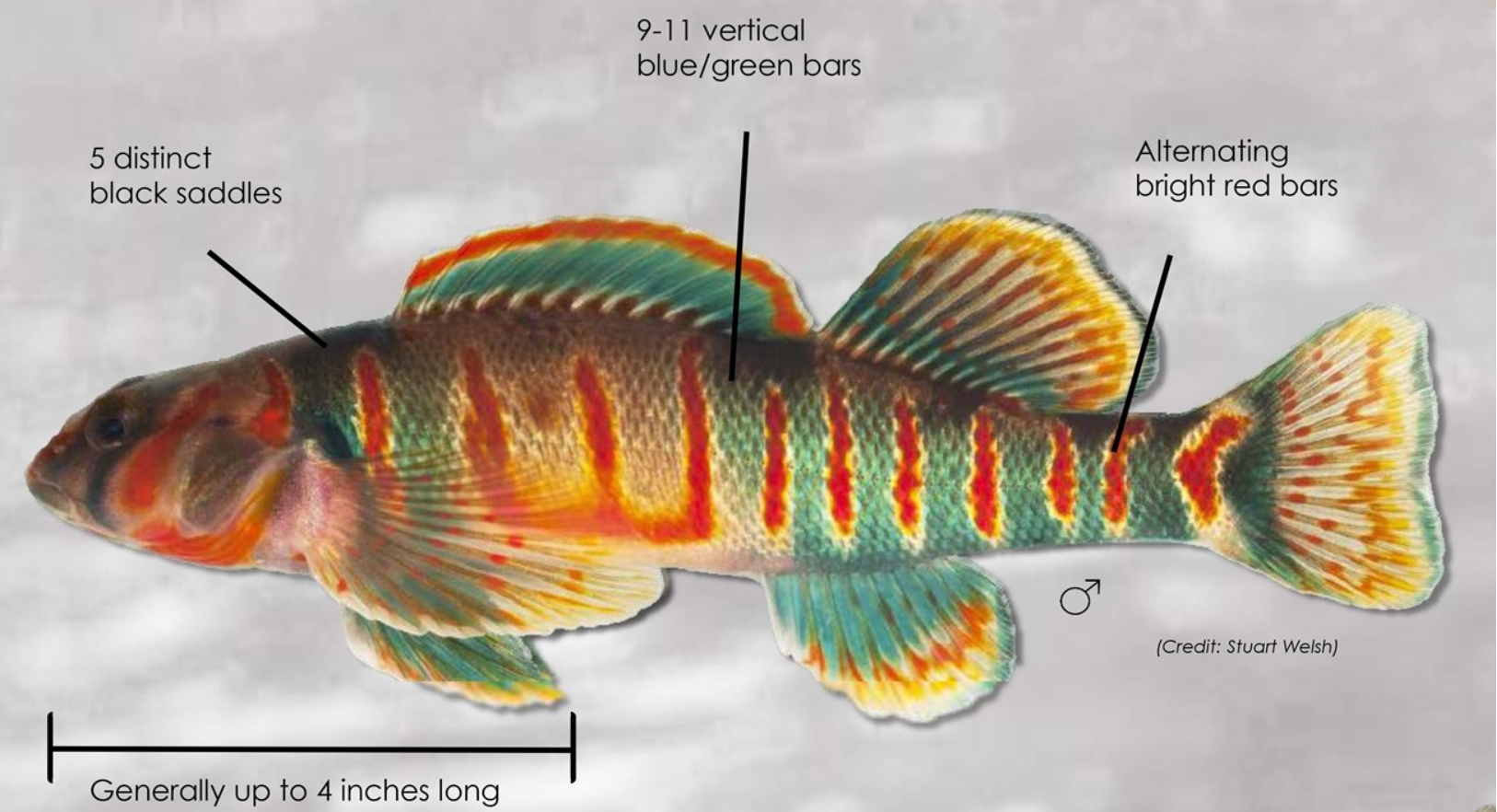
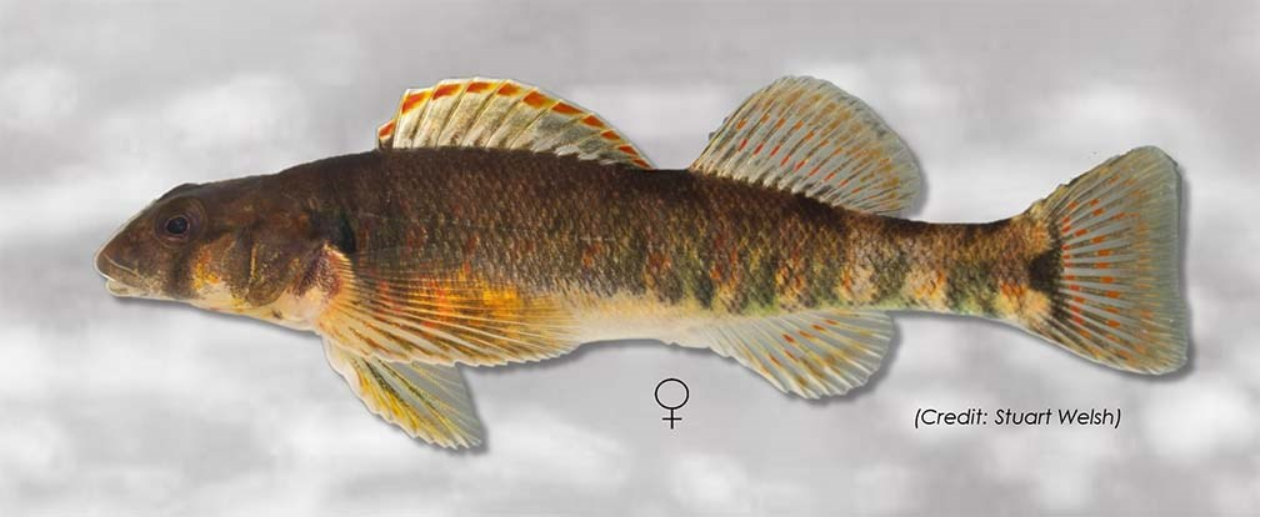
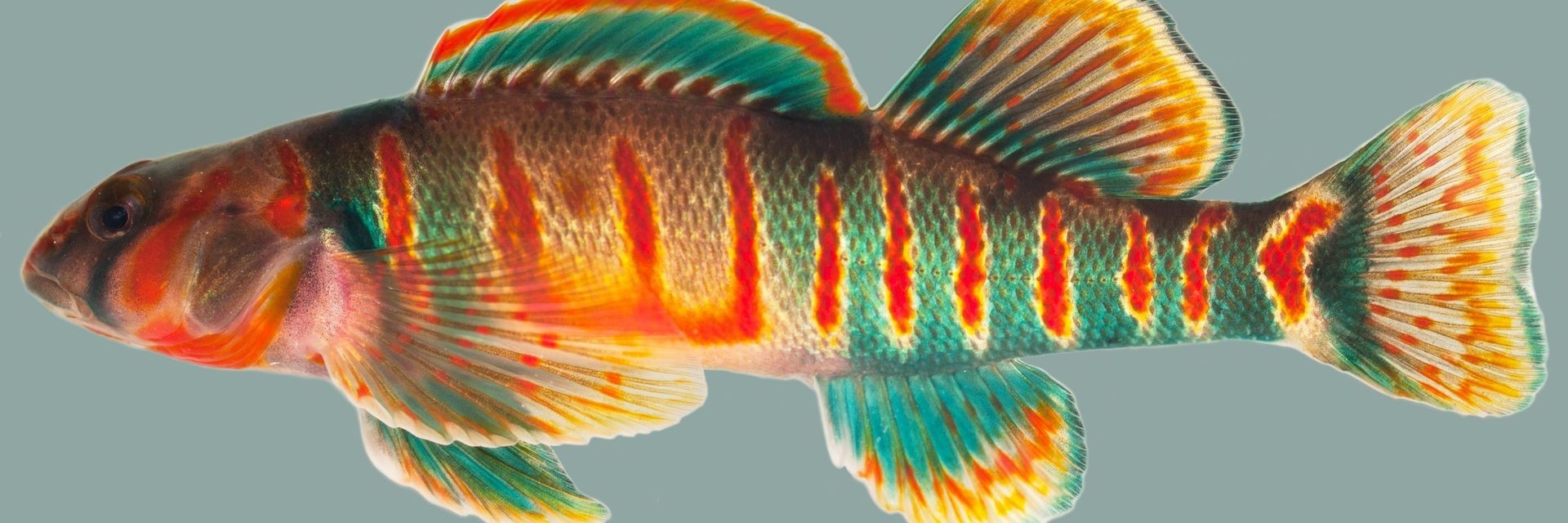
The candy darter, known by scientific name Etheostoma osburni, is an endangered fish endemic to the East coast of America. Living in the Kanawha River, which is a tributary of the Ohio river, and flows through the Appalachian mountains, winding through Virgina, with a majority in West Virginia. Identifiable from the lookalikes likely to be found in the same general areas by the distinct saddles in front of the dorsal fin, and by the number of blue and orange bars on the fish. Despite the wonderfully bright color of the males, there is a significant case of sexual dimorphism, with the females of this species bearing the same marking but in a much cooler olive color.
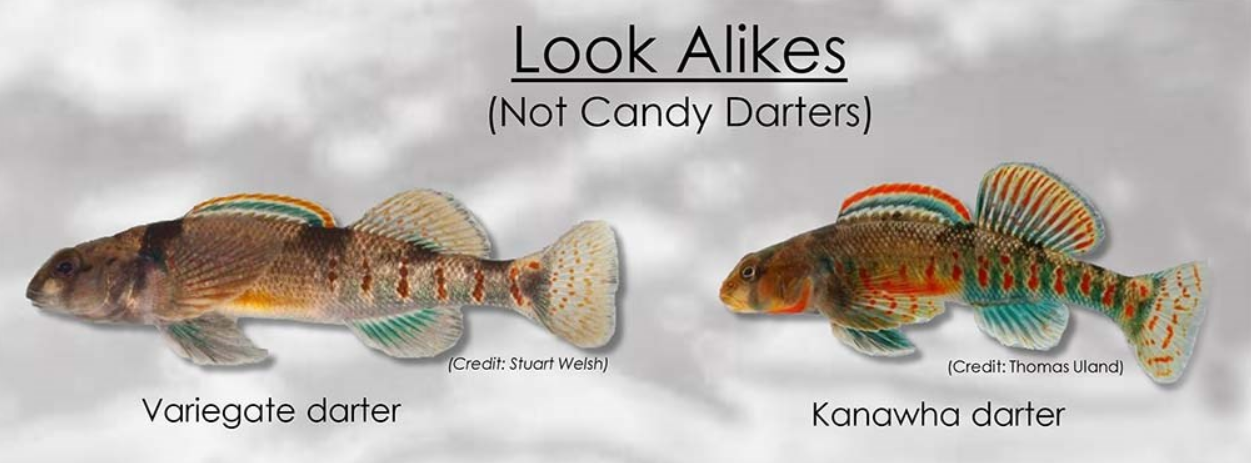
Described in 1932, these fish are a rare find in freshwater areas of North America, being described as "[possibly] the most vivid freshwater fish in North America"- by A Field Guide to Freshwater Fishes, Page and Burr 1991. These fish used to have a historic range across 37 known sites, but can now be found in only 10, being impacted greatly by human interference. The biggest issue these fish face is the introduction of a second species of darter, the variegate darter (Etheostoma variatum) which is thought to have been introduced into the area by bait bucket dumping into streams. These fish are able to hybridize, and offspring are closer to variegate darter, than their cander darter parents, overtime wiping out candy darters from their natural habitats. Habitat loss is also a worry for these fish, as they rely on pure and unsalted waters and clean gravel to lay eggs on. But, hope remains for the fate of these fish. Conservation efforts for candy darters are well underway, and the ability to save these species is still very possible.
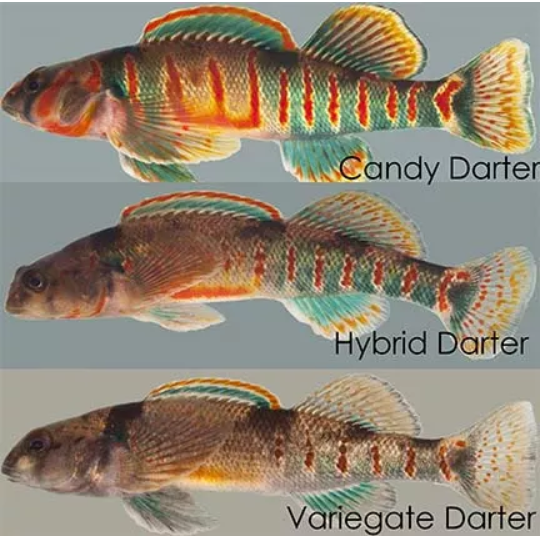
Candy darters can get as large as 4 inches, and have a lifespan of 3 years. Only hitting sexual maturity at about year 2. Their spawning season is April-May and is in a preferred temperature of 15-18 degrees C. Females during this season are bound to the river bottom as they brood hide, choosing only to lay eggs on fine pebbles and gravel. This is why excess sediment in rivers like this is such a huge concern for this species. During this breeding season male candy darters become aggressive and infight for the ability to fertilize eggs, leaving only the largest and most successful males the ability to pass their genes forward
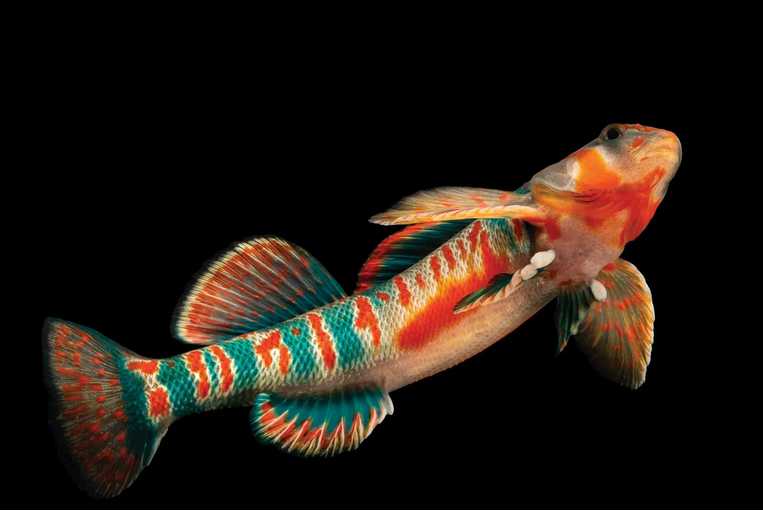
During their lifespan the diet of the candy darter consists of macroinvertebrates. Mostly flies, caddisflies, mayflies, and larvae that they can get their hands on. Later in their life, they will be eaten by larger fish primarily. Along with these, these fish are known for their ability to help the reproduction of freshwater mussel species. This helps keeps river clear
Have a wonderful Tuesday, everyone!